Lesson Objective
This lesson teaches the fundamental techniques of portrait photography. By the end, you will understand how to pose subjects naturally, use light to flatter faces, connect with subjects to capture authentic expressions, and apply technical settings that produce professional-quality portrait results regardless of your equipment level.
What You Will Learn
- Essential portrait lighting patterns and their effects
- Posing techniques that flatter various body types
- How to direct subjects and capture genuine expressions
- Ideal camera settings for portrait photography
- Choosing and managing backgrounds effectively
- Working with different portrait focal lengths
- Environmental portraits versus studio-style results
Required Knowledge or Tools
Complete Lessons 1 through 8 before beginning this lesson. A camera with manual controls and a lens suitable for portraits (50mm or longer equivalent) will produce the best results, though any camera can be used to practice these concepts. Most importantly, you need a willing subject to practice with, someone patient enough to work through various poses and lighting setups.
Core Concept Explanation
Portrait photography combines technical skill with interpersonal ability. You must simultaneously manage camera settings, lighting, composition, and posing while also maintaining rapport with your subject to capture authentic expressions. This balance makes portraiture both challenging and rewarding. The best portrait photographers are often excellent communicators as much as skilled technicians.
Unlike landscapes or architecture, portrait subjects are aware of being photographed. This awareness can produce self-consciousness, stiff poses, and fake smiles. Learning to put subjects at ease and guide them toward natural expressions is as important as any technical consideration. Technical perfection with an uncomfortable-looking subject yields inferior results to slightly imperfect shots capturing genuine moments.
Portrait Lighting Patterns
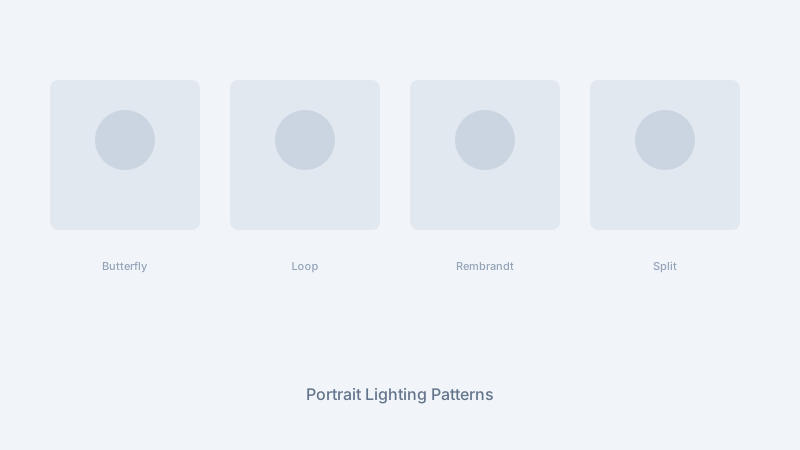
Portrait lighting patterns describe how light and shadow fall across a face. Each pattern creates a distinct mood and flatters different face shapes. Understanding these patterns helps you position light sources, whether natural or artificial, to achieve your desired effect.
Butterfly lighting places the main light directly in front of and above the subject, creating a butterfly-shaped shadow under the nose. This glamorous pattern flatters faces with good bone structure and is common in beauty photography. Loop lighting positions the light slightly to one side, creating a small, looped shadow beside the nose that adds dimension while remaining flattering for most faces.
Rembrandt lighting moves the light further to the side, creating a triangular light patch on the shadowed cheek. This dramatic pattern adds considerable depth and is named after the painter who frequently used it. Split lighting places light at 90 degrees to the subject, illuminating exactly half the face while leaving the other half in shadow. This creates bold, dramatic, sometimes mysterious portraits.
Posing Fundamentals
Natural-looking poses rarely feel natural to the subject. Most people, when told to stand naturally, adopt awkward, symmetrical stances that photograph poorly. Effective posing involves subtle adjustments that appear relaxed in photographs but may feel unfamiliar to subjects unaccustomed to being photographed.
Weight distribution significantly affects how bodies appear. Having subjects shift weight to their back foot creates a more dynamic, slimming stance. Angling shoulders rather than facing the camera directly often produces more flattering results. Slight head tilts add engagement, though direction matters; tilting toward the higher shoulder typically looks more natural.
Hands require particular attention. Hands hidden entirely can look unnatural, while hands prominently displayed become distracting. Giving hands something to do, resting on a surface, in pockets with thumbs visible, or lightly touching the face, usually produces better results than hands hanging awkwardly at sides.
Connecting with Subjects
Technical excellence means nothing if subjects look uncomfortable. Building rapport begins before you even pick up the camera. Chat casually, explain what you are doing and why, and give positive feedback throughout the shoot. Most people feel self-conscious in front of cameras; your job includes making them forget about the lens.
Direction should be positive and specific. Instead of saying "That looks awkward," say "Now let's try turning your shoulders this way." Instead of vague instructions like "Look natural," give specific actions: "Think about something that made you laugh recently" or "Look toward that window for a moment." Specific direction produces better results than abstract requests.
Why This Lesson Matters
Portraits are among the most frequently requested photographs. Friends, family, and clients want images of themselves and their loved ones. Developing portrait skills enables you to capture important moments for the people in your life and potentially opens professional opportunities as portrait photography is a common commercial genre.
Portrait photography also develops transferable skills. The ability to connect with subjects, provide direction, and manage multiple variables simultaneously applies to many photographic situations. Even if portraiture never becomes your primary interest, the skills learned here enhance your overall photographic capability.
Step-by-Step Tutorial
Master the Loop Lighting Pattern
Position your subject near a large window. Have them face the window at approximately 45 degrees rather than directly. Observe how a small shadow appears beside the nose on the side away from the window. Adjust the angle until the shadow appears but does not merge with the shadow on the cheek. This versatile pattern works for most faces.
Set Optimal Camera Settings
Use aperture priority mode with a wide aperture (f/2.8 to f/4) to separate your subject from the background with shallow depth of field. Focus precisely on the eyes, as sharp eyes are essential in portraiture. Choose a shutter speed fast enough to prevent motion blur, at least 1/125 second for still subjects.
Practice Basic Posing Adjustments
Have your subject stand facing the camera directly, then observe the result. Now have them angle their body 45 degrees while turning their face back toward the camera. Compare the two images. The angled pose typically appears more dynamic and flattering. Continue experimenting with weight shift, shoulder position, and head angle.
Capture Genuine Expressions
Rather than asking for a smile, engage your subject in conversation. Ask about their interests, their weekend plans, or tell them something amusing. Photograph during these interactions when expressions are genuine rather than posed. The best expressions often come between formal shots when subjects relax momentarily.
Control the Background
Examine your backgrounds critically. Look for distracting elements like poles appearing to sprout from heads, bright spots pulling attention from faces, or cluttered environments competing with your subject. Either choose simpler backgrounds or use wider apertures to blur distractions into unrecognizable soft shapes.
Common Mistakes and Misunderstandings
Focusing on the Nose Instead of Eyes
At wide apertures, depth of field is extremely shallow. Focusing on the tip of the nose may leave eyes soft, which ruins portraits since eyes are the emotional center of faces. Always focus on the eye nearest the camera, even if this means other features fall slightly out of focus.
Shooting at Eye Level Only
Eye level shots are safe but can become monotonous. Shooting slightly above eye level often flatters subjects by emphasizing eyes while minimizing double chins. Shooting below eye level conveys power and authority. Vary your shooting angle to create diverse, interesting portraits.
Over-Directing Every Detail
While direction is important, over-directing produces stiff, unnatural results. After positioning your subject, allow them small natural movements. Some of the best portraits come from moments when subjects make minor adjustments between directed poses. Balance guidance with freedom for spontaneous authenticity.
Practical Example or Scenario
A friend asks you to take a portrait for their professional profile. You scout locations and find a spot with a clean, professional-looking background and access to soft natural light from a nearby building's shadow. You schedule the shoot for late afternoon when the light is warm but not harsh.
On location, you spend the first few minutes chatting while your friend gets comfortable. You explain each step of your process so they know what to expect. Starting with straightforward poses, you position them at a slight angle to the camera with the soft light creating gentle loop shadows on their face.
Your friend initially offers a stiff, formal smile. You continue shooting while asking about their work, what excites them about their field, and recent projects. As they answer enthusiastically, you capture natural expressions that convey competence and approachability far better than the forced smile. From dozens of frames, you select the few where everything aligned: flattering light, natural expression, sharp focus on the eyes, and clean background. The result looks professional despite requiring no studio or expensive equipment.
Focal Length Considerations
Focal length affects facial proportions in portraits. Wide-angle lenses exaggerate features nearest the camera, making noses look larger and faces appear distorted. Telephoto lenses compress features, producing more flattering results. Traditional portrait focal lengths range from 85mm to 135mm (full-frame equivalent), though 50mm works acceptably with careful subject distance.
Lesson Summary
- Portrait lighting patterns (butterfly, loop, Rembrandt, split) create different moods
- Effective posing involves subtle adjustments that photograph well but may feel unfamiliar
- Building rapport and providing positive direction yields natural expressions
- Always focus on the eyes, the emotional center of any portrait
- Background management is essential; distractions weaken otherwise strong portraits
- Moderate telephoto focal lengths produce the most flattering facial proportions
- Technical skill and interpersonal ability must develop together in portraiture