Lesson Objective
This lesson introduces the fundamental principles of photographic composition. By the end, you will understand how to arrange elements within your frame to create visually compelling images that effectively communicate your intended message, guide viewer attention, and evoke emotional responses.
What You Will Learn
- The rule of thirds and when to apply or break it
- How leading lines direct viewer attention through images
- Using frames within frames to add depth and context
- The power of symmetry and patterns in photography
- Negative space and its role in composition
- Creating depth through foreground, middle ground, and background
- The golden ratio and other advanced composition concepts
Required Knowledge or Tools
Complete Lessons 1 through 6 before beginning this lesson. Any camera, including smartphones, can be used for composition practice. The concepts in this lesson are universal and apply regardless of equipment. Having a variety of subjects and environments available for practice will help reinforce these principles.
Core Concept Explanation
Composition is the arrangement of visual elements within your frame. While exposure controls how light is captured, composition controls what is captured and how elements relate to each other. Strong composition transforms ordinary subjects into compelling photographs, while weak composition can undermine even technically perfect images of extraordinary subjects.
Composition is not about rigid rules but about understanding principles that have guided visual artists for centuries. These principles work because of how human vision and psychology function. Learning them gives you a vocabulary for analyzing images and a toolkit for creating them. Once internalized, they become instinctive, allowing you to compose effectively without conscious calculation.
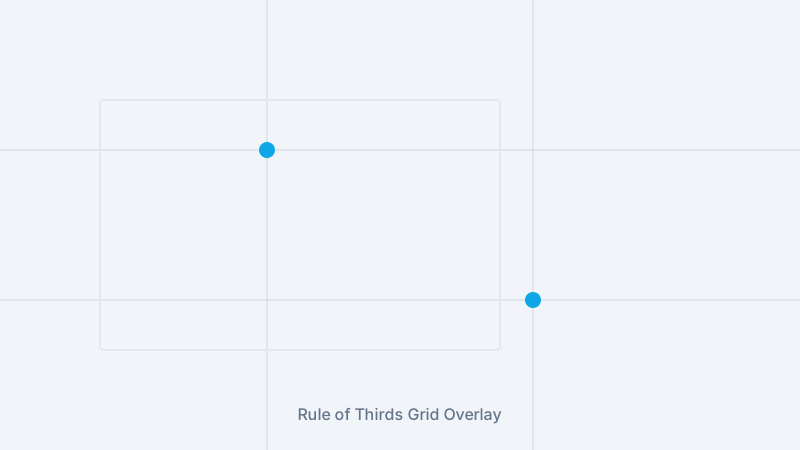
The Rule of Thirds
The most widely taught composition guideline divides your frame into nine equal sections using two horizontal and two vertical lines. Placing important elements along these lines or at their four intersections typically creates more dynamic, visually interesting images than centering subjects. This principle works because it creates asymmetry that keeps the eye moving through the frame.
When photographing a person, placing their eyes at the upper third line often produces pleasing results. In landscapes, positioning the horizon along either the upper or lower third line emphasizes either the ground or sky. These are starting points, not absolute rules. Many powerful photographs place subjects dead center or break the rule of thirds entirely with deliberate purpose.
Leading Lines
Lines within your frame guide the viewer's eye through the image. Roads, fences, rivers, architectural elements, shadows, and countless other features can serve as leading lines. Effective use of leading lines draws attention toward your main subject or creates a visual journey through the photograph.
Leading lines can be obvious, like a road stretching toward the horizon, or subtle, like the direction of a subject's gaze. Diagonal lines tend to create more dynamic energy than horizontal or vertical lines. Converging lines, like railroad tracks meeting at a distant point, create strong depth perception and draw the eye powerfully into the image.
Framing Within Frames
Using elements in your scene to frame your subject adds depth, context, and visual interest. Doorways, windows, arches, tree branches, and countless other elements can create frames within your photograph. This technique directs attention to your subject while adding foreground interest and environmental context.
Frames need not be complete. Partial frames, elements that suggest enclosure without fully surrounding the subject, work effectively too. The frame itself can be sharp or blurred depending on your creative intent. Dark frames around lighter subjects can be particularly powerful, creating a spotlight effect that demands attention.
Symmetry and Patterns
Symmetrical compositions create feelings of balance, stability, and harmony. Architectural photography often emphasizes symmetry. Reflections in water or mirrors create natural symmetrical opportunities. Perfect symmetry can feel static; slight imperfections or asymmetrical elements within symmetrical frameworks often add visual tension and interest.
Patterns attract the eye and create visual rhythm. Repeating shapes, colors, or textures establish patterns that can fill a frame with graphic impact. Breaking a pattern with a contrasting element creates a powerful focal point, as the disruption draws immediate attention.
Negative Space
Empty space in your frame is not wasted space. Negative space, areas without detail or subject matter, provides visual rest, emphasizes your subject, and can communicate mood and emotion. A small subject surrounded by expansive negative space feels isolated, peaceful, or minimalist depending on context.
Learning to see and use negative space requires conscious effort. Our instinct is to fill the frame with our subject, but this often produces cluttered, confusing images. Deliberately including and positioning negative space can transform ordinary subjects into striking compositions.
Why This Lesson Matters
Technical excellence without compositional understanding produces sterile images. You can have perfect exposure, precise focus, and ideal lighting, yet create photographs that fail to engage viewers because elements are arranged without purpose. Composition is what transforms technical skill into artistic expression.
Furthermore, composition is the aspect of photography most transferable across genres and equipment. Whether shooting with a smartphone or a medium format camera, whether capturing portraits or landscapes, compositional principles remain constant. This makes composition knowledge among the most valuable investments in your photographic education.
Step-by-Step Tutorial
Enable Grid Display
Most cameras and smartphones can display a rule of thirds grid on the screen or viewfinder. Enable this feature in your camera settings. Use the grid as a compositional aid while shooting, placing key elements along the lines or intersections. The grid helps train your eye until placement becomes instinctive.
Practice Each Technique Individually
Choose one composition technique and spend an entire shooting session focusing exclusively on it. One day might be dedicated to leading lines, another to framing, another to negative space. This focused practice accelerates learning more than attempting everything simultaneously.
Photograph the Same Subject Multiple Ways
Select a single subject and photograph it using as many different compositional approaches as possible. Try rule of thirds, centered, with negative space, with a frame, including leading lines, and so on. Compare the results to understand how composition affects the feeling and impact of images.
Analyze Photographs You Admire
Study photographs that capture your attention and analyze their composition. Where is the subject placed? What lines guide your eye? How is space used? Understanding why effective images work helps you apply similar principles in your own photography.
Intentionally Break the Rules
After understanding the guidelines, practice deliberately breaking them with purpose. Center a subject when centering serves the image. Fill the frame completely when negative space would weaken impact. Understanding why rules exist enables purposeful violation when appropriate.
Common Mistakes and Misunderstandings
Following Rules Rigidly
Composition guidelines are tools, not laws. Applying them mechanically without understanding their purpose produces formulaic images. Learn the principles well enough to know when they serve your vision and when breaking them creates a stronger photograph.
Ignoring the Edges
Photographers often focus on their subject while neglecting the frame's edges. Distracting elements at the edges, or important elements cut off awkwardly, weaken otherwise strong compositions. Before pressing the shutter, scan the entire viewfinder, especially the edges and corners.
Including Too Much
When in doubt, simplify. Cluttered frames with too many competing elements confuse viewers and dilute impact. Ask yourself what can be removed from the frame without losing the photograph's purpose. Often, moving closer or choosing a different angle eliminates distractions.
Practical Example or Scenario
You discover a beautiful old lighthouse on a coastal cliff. Your first instinct might be to center the lighthouse and capture everything. Instead, you apply compositional thinking to create multiple distinct photographs of the same subject.
First, you position the lighthouse at the right third intersection, leaving two-thirds of the frame for dramatic sky. A path along the cliff creates a leading line from the lower left corner toward the lighthouse. This composition emphasizes the lighthouse's setting and draws the eye on a journey to the subject.
Next, you find an archway in a nearby stone wall. Positioning yourself so the arch frames the lighthouse adds depth and context, suggesting that someone is looking out at this scene. The frame within frame technique creates layers that make the image more immersive.
Finally, you shoot during blue hour when the lighthouse beacon is visible. You place the lighthouse very small in the frame, surrounded by the vast, moody sky and sea. This abundant negative space creates a feeling of isolation and the lighthouse's lonely vigil against the elements. Same subject, three completely different photographs, each with distinct emotional impact created through compositional choices.
The Golden Ratio
The golden ratio, approximately 1.618:1, appears throughout nature and has guided artists for millennia. A golden ratio spiral can guide placement of elements for naturally pleasing compositions. While more complex than the rule of thirds, understanding this principle adds another tool to your compositional toolkit.
Lesson Summary
- Composition is the arrangement of elements within your frame to create visual impact
- The rule of thirds places subjects along imaginary grid lines for dynamic balance
- Leading lines guide viewer attention through the image toward key elements
- Frames within frames add depth, context, and direct focus to subjects
- Symmetry creates balance while patterns establish visual rhythm
- Negative space provides rest and emphasis, not emptiness
- Guidelines are tools to learn, then transcend through purposeful application