Lesson Objective
This lesson teaches you to see, understand, and work with natural light. By the end, you will recognize different qualities of daylight, understand how light direction affects your subjects, and know how to use available light to create mood, dimension, and visual impact in your photographs without any artificial lighting equipment.
What You Will Learn
- The characteristics that define light quality: intensity, direction, color, and softness
- How time of day affects natural light and your photographs
- Working with golden hour and blue hour light
- Using overcast conditions and shade effectively
- Understanding and controlling contrast in natural light
- Positioning subjects relative to light direction
- Modifying natural light using reflectors and diffusers
Required Knowledge or Tools
Complete Lessons 1 through 7 before beginning this lesson. Any camera can be used for these exercises. A white poster board or commercial reflector is helpful but not required. Most importantly, you need willingness to shoot at different times of day and in various weather conditions to experience diverse natural lighting situations firsthand.
Core Concept Explanation
Light is the raw material of photography, yet many beginners focus exclusively on subjects while treating light as merely sufficient or insufficient. Understanding light transforms your photography more than any equipment upgrade could. Learning to see light, recognizing its qualities and potential, is among the most valuable skills any photographer can develop.
Natural light varies enormously depending on time, weather, location, and season. The same scene can produce completely different photographs simply by changing when you capture it. Professionals plan shoots around optimal light, sometimes waiting hours or returning multiple days for the right conditions. This patience reflects how much light quality affects final results.
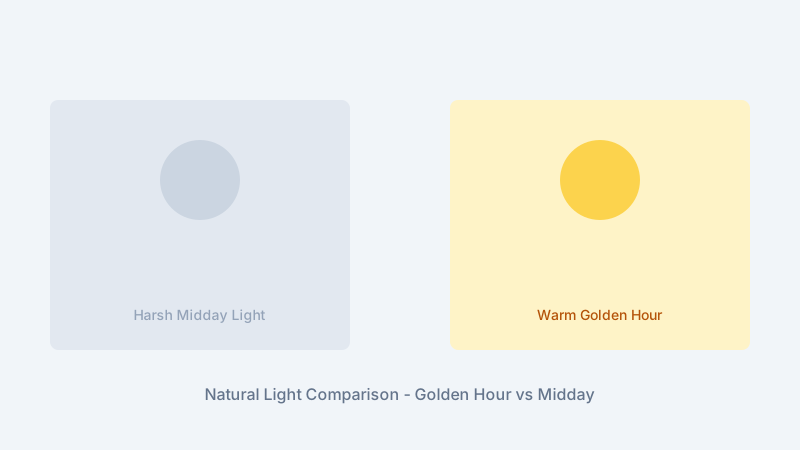
Light Quality: Hard vs. Soft
Light quality refers primarily to the transition between lit and shadowed areas. Hard light, from a small or distant source like direct midday sun, creates sharp-edged shadows with abrupt transitions. Soft light, from a large or diffused source like an overcast sky, creates gradual transitions and gentle shadows. Neither is inherently better; each serves different creative purposes.
Hard light emphasizes texture, creates drama, and defines shapes boldly. Soft light flatters skin, reveals detail in shadows, and creates gentle mood. Portrait photographers often seek soft light for flattering results. Architectural photographers might prefer hard light to emphasize structure and form. Understanding this distinction helps you choose conditions that serve your creative goals.
Light Direction
Where light comes from relative to your subject dramatically affects how three-dimensional objects appear in two-dimensional photographs. Front light, with the light source behind the photographer, illuminates subjects evenly but can appear flat. Side light creates shadows that reveal texture and form. Back light, with the source behind the subject, creates silhouettes or rim lighting effects.
Many beginners default to front lighting, assuming more light on the subject is always better. In reality, shadows provide essential depth cues. Completely shadowless images often look flat and lifeless. Learning to position subjects, or yourself, to achieve favorable light direction significantly improves results.
The Golden Hour
The period shortly after sunrise and before sunset, often called the golden hour, provides particularly beautiful light for photography. The low sun angle means light travels through more atmosphere, which warms its color and softens its intensity. Long shadows add dimension. The warm tones create inherently pleasing color palettes.
Golden hour does not last an exact hour; the duration depends on latitude and season. Near the equator, it may last only 20-30 minutes. At high latitudes during certain seasons, it can extend for hours. Apps and websites can calculate golden hour times for your location on any date, enabling you to plan shoots accordingly.
The Blue Hour
Before sunrise and after sunset, the sky takes on blue tones while ambient light remains sufficient for photography. This blue hour provides unique conditions: cool color temperatures, balanced exposure between sky and artificial lights, and a contemplative mood different from golden hour's warmth. Blue hour is particularly valued for cityscapes and architectural photography.
Overcast and Shade
Cloud cover acts as a giant softbox, diffusing sunlight across the entire sky. This creates very soft, even illumination that flatters many subjects, especially portraits. Colors appear more saturated in overcast conditions because there is no bright sky competing with subject colors. Rainy days can produce particularly interesting light, especially immediately after storms clear.
Open shade, areas shaded from direct sun but illuminated by sky light, provides similar soft qualities on sunny days. Positioning portrait subjects in shade eliminates harsh shadows and squinting while still providing ample light. Watch for color casts in shade; blue sky illumination can add cool tones that may need correction.
Why This Lesson Matters
Natural light is free, abundant, and infinitely variable. Learning to work with it effectively enables you to create professional-quality images without expensive lighting equipment. Many professional photographers prefer natural light for its organic qualities and work within its constraints rather than fighting them with artificial alternatives.
Even if you later learn studio lighting, natural light understanding remains essential. Artificial lighting often attempts to replicate natural light qualities. Understanding the original helps you create convincing simulations. Furthermore, many situations do not permit artificial lighting, making natural light skills indispensable.
Step-by-Step Tutorial
Photograph at Different Times of Day
Choose a static subject you can return to multiple times. Photograph it at dawn, mid-morning, noon, mid-afternoon, golden hour, and blue hour. Compare how the same subject appears completely different based solely on when you capture it. Note which times produce results you find most appealing.
Explore Light Direction
Using a willing subject or a simple object, photograph it with light coming from front, side, and back. Move around the subject rather than moving the subject itself. Observe how shadows change the apparent shape and texture. Notice which direction best reveals the subject's form.
Compare Hard and Soft Light
On a sunny day, photograph the same subject in direct sunlight and in open shade. Later, photograph the same subject on an overcast day. Compare the shadow characteristics, skin appearance if photographing people, and overall mood of each lighting condition.
Use a Reflector
Position a subject in side light that creates strong shadows on one side of their face. Use a white poster board, foam core, or commercial reflector to bounce light into the shadows. Observe how the reflector softens contrast without eliminating shadows entirely. Experiment with reflector distance and angle.
Shoot a Golden Hour Session
Plan a complete photo session during golden hour. Arrive early to scout and set up. Work efficiently once optimal light arrives, knowing it changes quickly. Practice positioning subjects with the warm light coming from different angles. Compare these results to similar subjects photographed at midday.
Common Mistakes and Misunderstandings
Avoiding Overcast Days
Many beginners believe sunny days are always better for photography. Overcast conditions actually provide excellent, flattering light for many subjects. Do not let cloudy weather keep you from shooting. Some of the most beautiful photographs are captured under gray skies.
Shooting at Midday
Midday sun creates the least flattering light for most subjects. Harsh, overhead illumination produces unflattering shadows under eyes and noses in portraits, and flat, high-contrast results in landscapes. When possible, schedule outdoor shoots for early morning or late afternoon.
Ignoring Window Light Indoors
Window light is simply controlled natural light available indoors. A large window provides beautiful, directional, soft light perfect for portraits and still life photography. Many professional photographs use nothing more than well-positioned window light. Learn to use this readily available resource.
Practical Example or Scenario
You are asked to photograph a friend's portrait using only natural light. At their house, you discover a large north-facing window that provides soft, even illumination throughout the day. You position your subject about three feet from the window, facing it at a slight angle rather than directly.
The window light creates gentle shadows on the side of their face away from the window, adding dimension while remaining flattering. You notice the shadows are slightly too dark, so you position a white foam board on the shadow side to bounce some light back, lifting the shadows without eliminating them.
The resulting portrait has professional-quality lighting: dimensional but not harsh, flattering but not flat. You created this using only a window and a simple reflector, demonstrating that understanding light matters more than owning expensive equipment. The same principles apply outdoors: finding or creating soft, directional light that flatters your subject.
White Balance Considerations
Natural light color varies dramatically from warm sunrise to cool blue hour. Your camera's auto white balance usually handles these shifts, but learning to set white balance manually gives you creative control. Sometimes you want to preserve the warm golden hour tones; other times you might want to neutralize them. Understanding white balance complements your lighting knowledge.
Lesson Summary
- Light quality (hard or soft) depends on source size relative to subject
- Light direction (front, side, back) dramatically affects dimension and mood
- Golden hour provides warm, soft, dimensional light ideal for most subjects
- Blue hour offers cool tones and balanced exposure for cityscapes
- Overcast skies and shade provide soft, flattering illumination
- Reflectors can modify natural light by filling shadows
- Learning to see and work with available light is more valuable than expensive equipment