Lesson Objective
This lesson covers the principles and techniques of landscape photography. By the end, you will understand how to scout and plan landscape shoots, select appropriate equipment and settings, create compelling compositions in natural environments, and work with the challenges and opportunities that outdoor photography presents.
What You Will Learn
- Planning and scouting techniques for landscape photography
- Essential equipment for capturing landscapes effectively
- Composition principles specific to landscape imagery
- Working with natural light throughout the day
- Maximizing depth of field and sharpness
- Using filters to manage challenging lighting conditions
- Creating depth through foreground, middle ground, and background elements
Required Knowledge or Tools
Complete Lessons 1 through 9 before beginning this lesson. A sturdy tripod is highly recommended for landscape photography. Wide-angle lenses are preferred but not essential. Access to natural outdoor environments will make practice more effective, though landscape principles can be applied even in urban settings with views of sky and distant elements.
Core Concept Explanation
Landscape photography captures the natural world, from intimate scenes of forest floors to grand vistas of mountain ranges. Unlike portrait or event photography where subjects are often present and controllable, landscape photography requires patience, planning, and adaptation to uncontrollable variables like weather and light. The best landscape photographers return to locations repeatedly, waiting for conditions that transform ordinary scenes into extraordinary photographs.
While landscape photography might seem like simply pointing a camera at pretty views, compelling landscape images require as much thought and skill as any other photographic discipline. Composition, light quality, timing, and technical execution all contribute to success. Understanding these elements separates memorable landscape photographs from forgettable snapshots of beautiful places.
Planning and Scouting
Successful landscape photography often begins long before arriving at a location. Research potential locations using maps, photography websites, and social media. Understand how light will fall at different times of day and different seasons. Apps can show sun and moon positions for any location and date, helping you plan when to arrive for optimal light direction.
Scout locations before your planned shoot if possible. Walking the area reveals compositions not visible from parking spots or obvious viewpoints. Note promising foreground elements, assess how conditions might change throughout the day, and identify backup locations if your primary spot does not work as hoped. This preparation dramatically increases success rates.
Composition for Landscapes
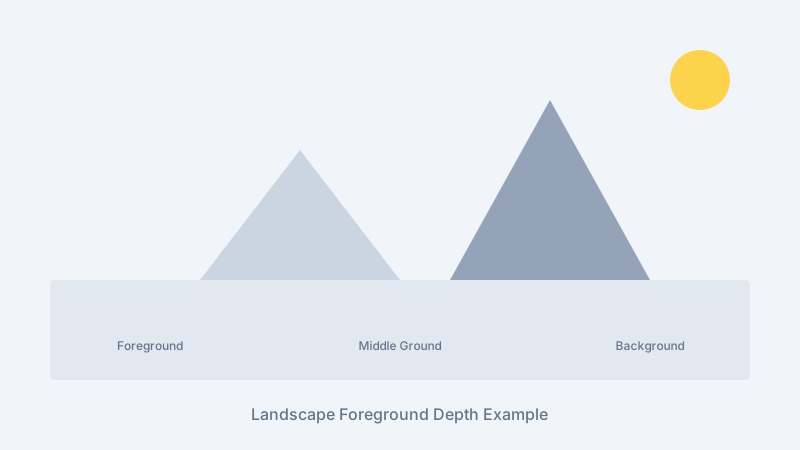
Landscape composition builds on principles from Lesson 7 while emphasizing elements specific to outdoor scenes. Foreground interest is particularly important in landscapes; a leading rock, wildflower patch, or stream adds depth and scale while giving viewers an entry point into the image. Without foreground interest, many landscape photographs feel empty despite featuring impressive scenery.
Horizon placement significantly affects landscape mood. A high horizon emphasizes foreground and ground elements. A low horizon showcases dramatic skies. Generally, avoid placing horizons dead center unless symmetry is your specific intent. Leading lines work powerfully in landscapes: paths, rivers, fences, and rock formations can guide viewers through your scene toward key elements.
Light in Landscape Photography
Light makes or breaks landscape photographs. The quality, color, and direction of light transform scenes far more than any composition or camera setting. Most accomplished landscape photographers shoot primarily during golden hour, when warm, dimensional light creates mood and reveals texture. Midday sun produces harsh shadows and flat, washed-out results in most landscapes.
Weather creates photographic opportunities. Storm light, where sun breaks through clouds to spotlight portions of the landscape, can be spectacular. Fog and mist add atmosphere and simplify complex scenes. Rain creates saturated colors and interesting reflections. Overcast conditions, while lacking drama, provide even illumination excellent for certain subjects like waterfalls and forests.
Technical Considerations
Landscape photography typically prioritizes depth of field and sharpness. Apertures between f/8 and f/11 often provide the best balance of depth and sharpness for most lenses. Smaller apertures like f/16 or f/22 provide greater depth but introduce diffraction softening. Use the hyperfocal distance technique from Lesson 4 to maximize front-to-back sharpness.
Tripods enable longer exposures necessary for deep depth of field in low light. They also encourage more deliberate composition and allow multiple frames for focus stacking or exposure blending. Cable releases or self-timers prevent camera shake during exposure. Mirror lock-up, available on DSLR cameras, reduces vibration from the mirror mechanism.
Why This Lesson Matters
Landscape photography connects us with the natural world and can be practiced anywhere nature exists. It requires no willing subjects, no studio equipment, and can be pursued solo at your own pace. The meditative process of waiting for light, observing carefully, and working with nature rather than controlling it offers rewards beyond the resulting photographs.
The skills developed in landscape photography, patience, observation, working with available light, and creating compositions from chaos, transfer to many other photographic situations. Even if landscapes never become your primary focus, time spent practicing these techniques will improve your overall photographic vision.
Step-by-Step Tutorial
Scout Your Location in Advance
Visit a potential landscape location during midday when light is poor for photography but visibility is good. Walk the area and note promising compositions. Consider how different light directions would affect each composition. Identify where you want to be positioned when optimal light arrives, and plan your timing accordingly.
Arrive Early and Set Up
Arrive at your chosen location at least 45 minutes before optimal light. Set up your tripod at your predetermined position. Make fine composition adjustments now while you can see clearly. Being prepared before the light peaks means you capture it rather than rushing to set up while it fades.
Find Compelling Foreground
Before finalizing your composition, explore the immediate area for foreground elements. Rocks, plants, patterns in sand or water, or anything that adds interest and scale. Position yourself so this foreground leads the eye toward your main subject. A strong foreground can elevate an ordinary scene significantly.
Set Optimal Technical Settings
Select an aperture between f/8 and f/11 for best sharpness with adequate depth. Use the lowest ISO possible for clean images. Let shutter speed fall where it may; with a tripod, long exposures are not a problem. Focus approximately one-third into the scene to maximize depth of field using hyperfocal distance principles.
Work the Light
As light changes during golden hour, conditions shift rapidly. Do not take one photograph and consider yourself done. Observe how shadows move, how color temperature shifts, how clouds catch light differently minute to minute. Take multiple photographs throughout this period; the best frame may come early, late, or somewhere in between.
Common Mistakes and Misunderstandings
Shooting Only at Eye Level
Standing and shooting from eye level is natural but often produces uninteresting perspectives. Getting low emphasizes foreground elements and creates more dramatic compositions. Sometimes higher vantage points reveal patterns invisible from ground level. Explore different heights before settling on your final composition.
Ignoring Weather Conditions
Clear blue skies, while pleasant, often produce less interesting landscape photographs than more dramatic weather. Clouds add interest to skies, storms create atmosphere, and changing conditions produce spectacular moments. Do not retreat just because conditions are not perfect; imperfect weather often yields the most memorable images.
Including Too Much
Wide-angle lenses can include vast scenes, but including everything usually dilutes impact. Identify what specifically drew you to the scene and compose to emphasize that element. Sometimes a tighter composition focusing on one compelling feature outperforms an expansive view that includes the feature among many distractions.
Practical Example or Scenario
You have planned a trip to photograph a local lake known for beautiful sunrise reflections. Research shows the sun rises over mountains across the lake, and the best conditions typically occur in early autumn when mist often forms over the water. You identify a rocky shore area that might provide foreground interest.
Arriving an hour before sunrise in complete darkness, you use a headlamp to navigate to your scouted position. You set up your tripod low among the rocks, composing so interesting stones fill the foreground while the lake and mountains stretch beyond. As twilight begins, mist rises from the water exactly as you hoped.
During blue hour, you capture the serene, cool tones with the mountain silhouette reflected in still water. As the sun breaks the horizon, warm light illuminates the mountains and mist turns golden. You photograph continuously, adjusting composition slightly as conditions change. The entire optimal shooting window lasts only about 20 minutes, but your preparation allows you to capture it fully. From perhaps 50 frames, you identify several keepers that succeed because you planned, scouted, arrived early, and responded to changing conditions.
Using Filters
Polarizing filters reduce reflections and increase color saturation, particularly useful for landscapes with water or foliage. Graduated neutral density filters balance bright skies with darker foregrounds without requiring exposure blending. These filters remain valuable tools despite advances in post-processing, as they capture data that cannot be recovered after the fact.
Lesson Summary
- Planning and scouting dramatically increase landscape photography success rates
- Compelling foreground elements add depth and provide entry points into images
- Light quality determines landscape success more than any other factor
- Golden hour provides ideal conditions for most landscape subjects
- Apertures between f/8 and f/11 typically provide optimal sharpness and depth
- Weather creates opportunities; do not avoid challenging conditions
- Tripods enable technical excellence and encourage deliberate composition